AI Bedroom Design: How to Plan a Calm, Shoppable Bedroom
Design your bedroom with AI: bed placement, sizing rules, lighting, colour palettes and how to turn an AI bedroom design into real furniture.
A bedroom has fewer pieces than a living room, but each one matters more. The bed has to fit, the room has to feel calm, and you need light and storage that work at 7 a.m. and 11 p.m. AI bedroom design helps you see options side by side before you commit to a bed frame you'll live with for years.
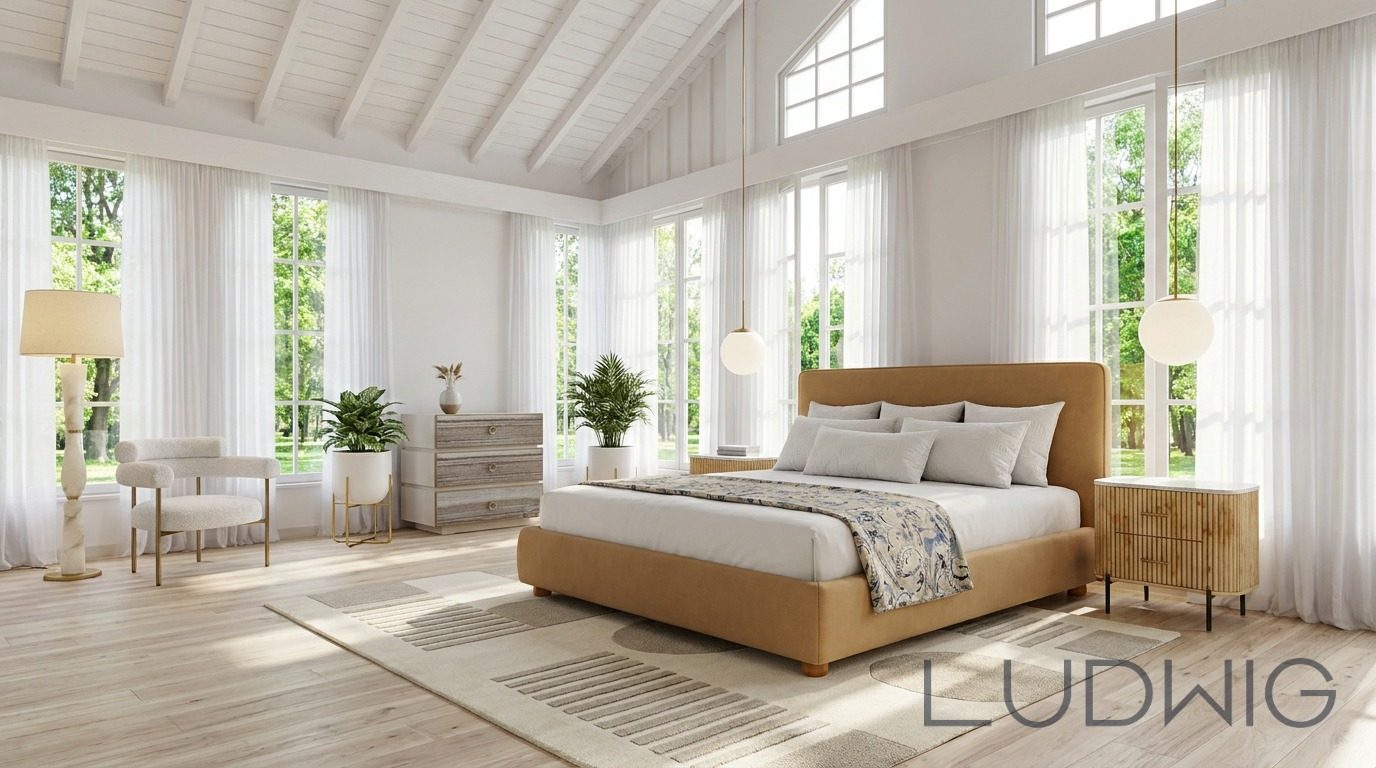
Bright Garden Bedroom by Ludwig shows how a large room stays calm: one camel upholstered bed, warm white walls, sheer drapes and a few brass accents, with the furniture grouped on a single rug.
Start With the Bed
The bed decides the rest of the room. Tell the AI the bed size you want, or ask it to suggest one based on your room dimensions.
- Leave at least 24 inches (60 cm) on each side of the bed you walk around, ideally 30–36 inches.
- Leave about 36 inches (90 cm) at the foot if a dresser faces the bed.
- Place the headboard on a solid wall, not under a window, when you can.
- Nightstands should be roughly level with the top of the mattress.
Choose a Calm Palette
Bedrooms usually feel best with a narrow palette: two main colours and one accent. Ask the AI for three palettes based on a single photo you love, then compare them in your room's real light. Warm neutrals, muted greens and soft blues are popular because they read calm in both morning and evening light.
Not sure where to start? Upload a painting, a hotel room or a Pinterest board to Ludwig. It reads the colours and materials and designs the bedroom around them.
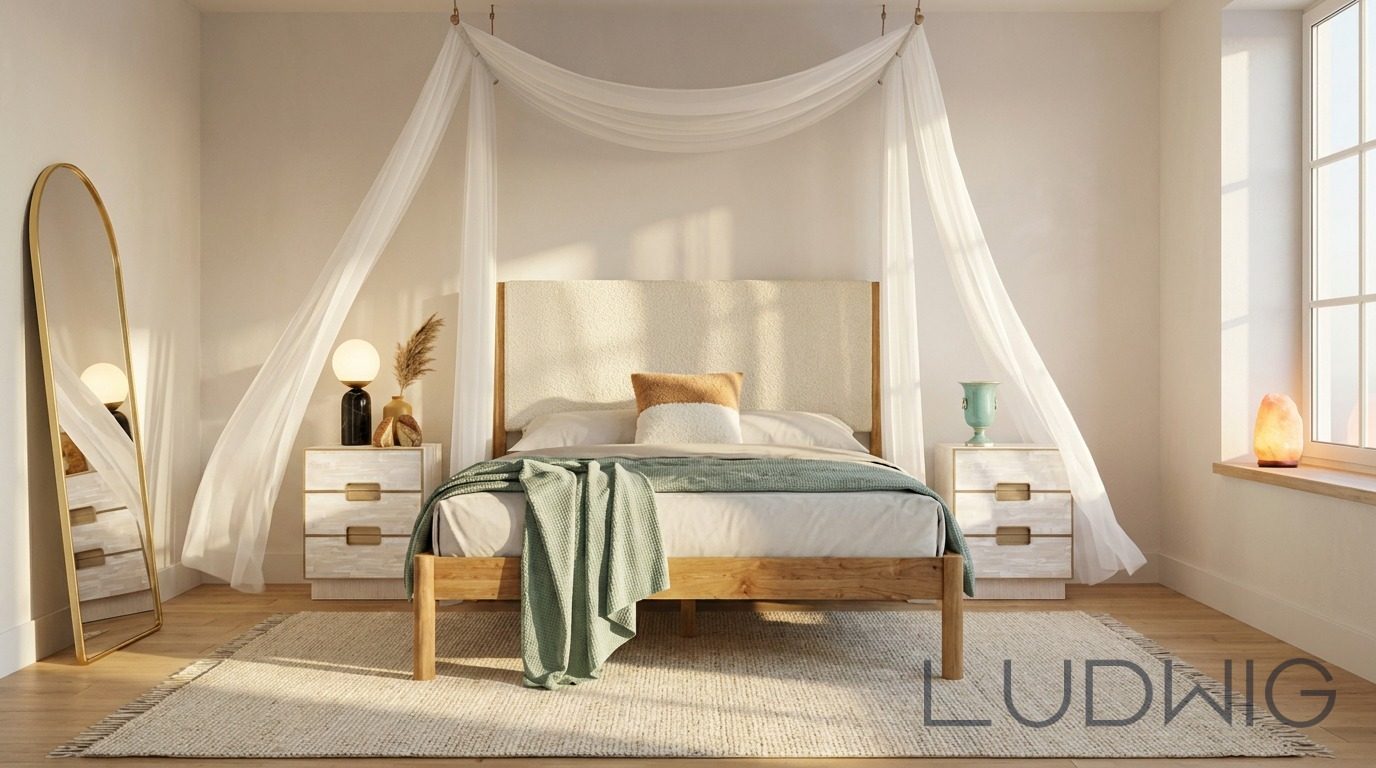
Sunday Morning Sanctuary by Ludwig keeps the palette to cream, warm oak and one sage throw. A boucle headboard, sheer canopy drapes and a full-length brass mirror make the room feel soft without adding clutter.
Layer the Lighting
A single ceiling light makes a bedroom feel flat. Ask the AI to include:
- Bedside lamps or wall sconces for reading.
- A soft ambient light, like a floor lamp in a corner.
- Warm bulbs (around 2700K) for evening.
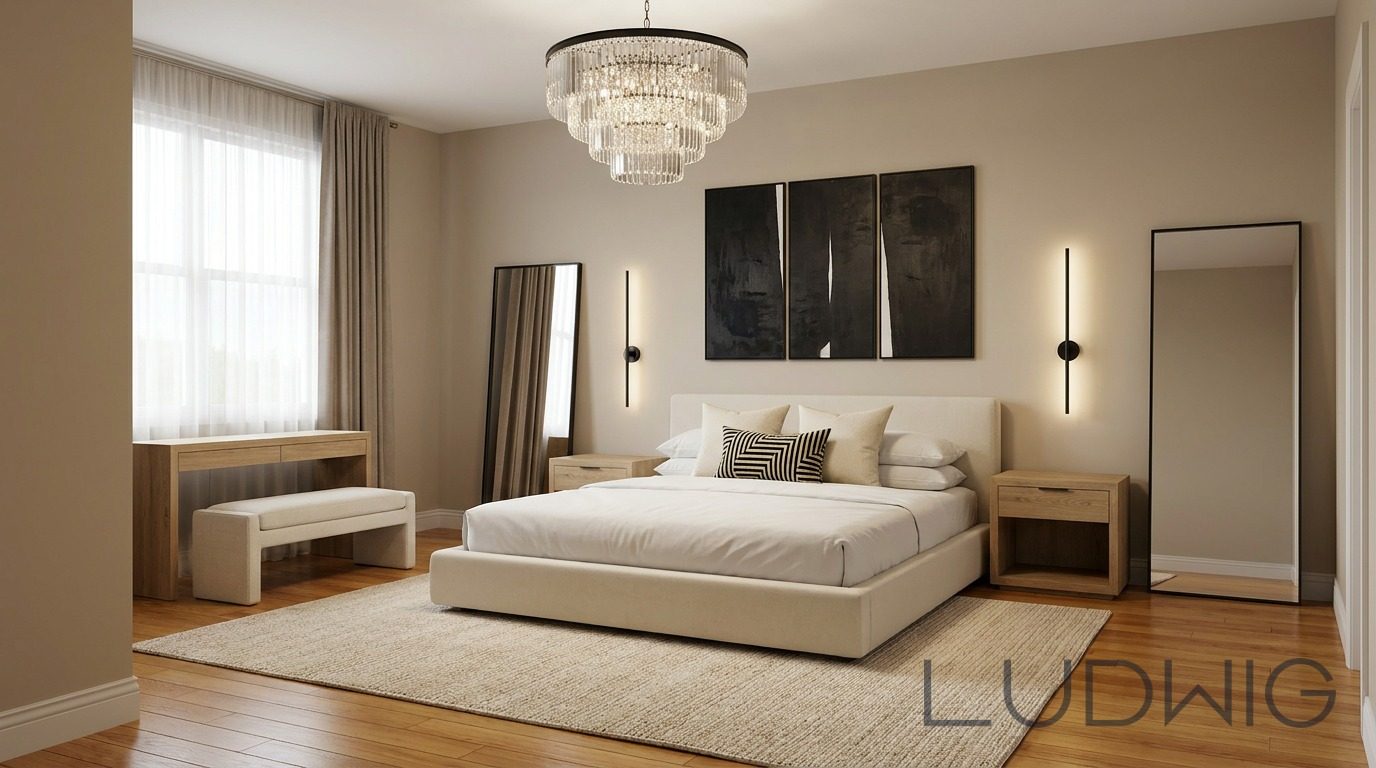
This Ludwig primary bedroom design shows layered light in practice: a crystal chandelier for ambient light, slim wall sconces beside the bed and daylight through sheer curtains. A low cream platform bed, oak nightstands and a vanity with a bench keep the larger room balanced.
Plan Storage Early
Clutter is the fastest way to lose a calm bedroom. Include a dresser, a bench with storage or a bed with drawers in your brief. In small bedrooms, ask the AI for tall, narrow storage instead of wide pieces.
Small Bedroom Ideas
- Use a bed with legs so the floor reads as continuous.
- Pick wall-mounted lights to free up nightstand space.
- Choose one large rug instead of two small runners.
- Hang curtains high and wide to make windows feel bigger.
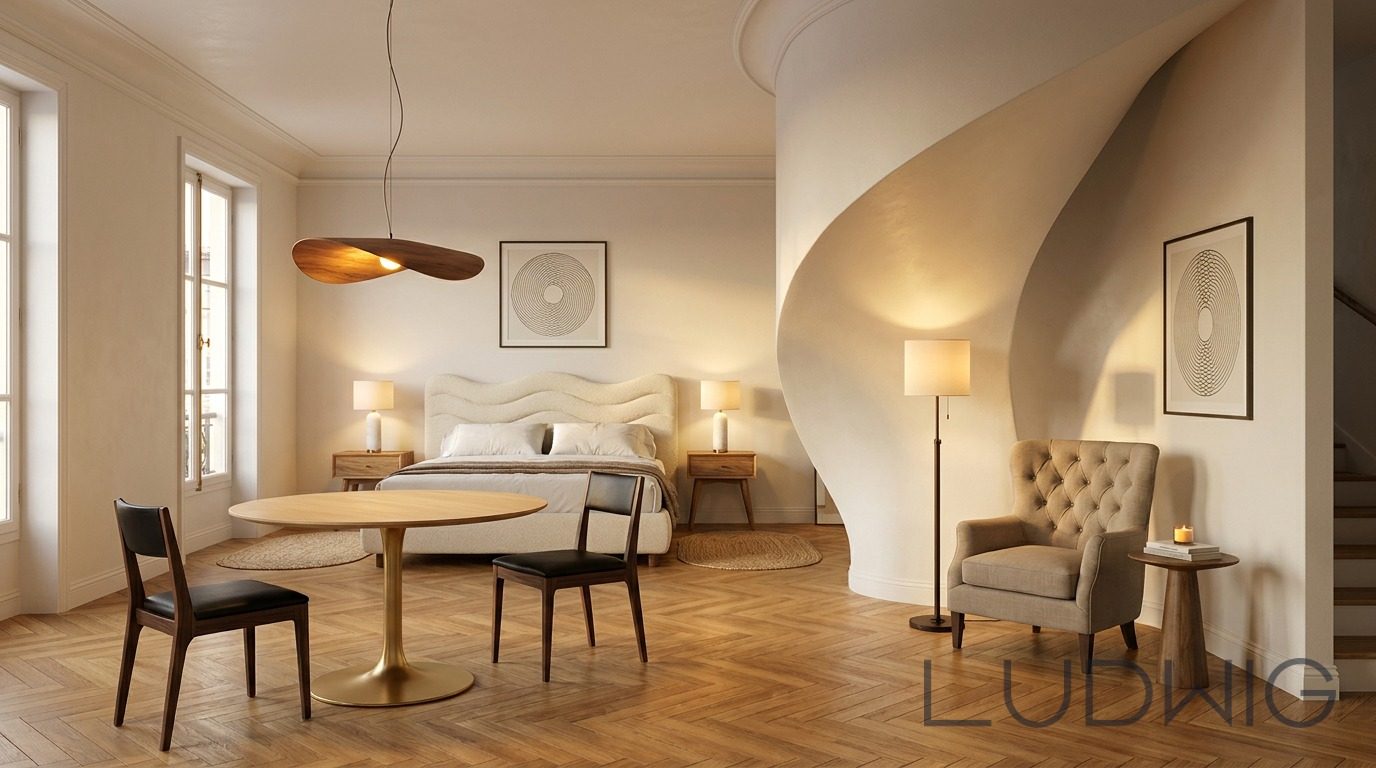
Sleeping in a studio or open-plan apartment? This Ludwig short-stay apartment design places a wavy upholstered bed between matching lamps, then uses a round dining table and a tufted armchair to give each zone its own job in one open room.
Furnishing a guest room or rental? See our Airbnb furniture checklist for the bedroom essentials guests expect.
From AI Design to a Real Bedroom
Many AI tools stop at the image. Ludwig designs with real products from 300+ vendors and shows retail prices and live stock status (in stock, quantity available or out of stock), so you can order the bedroom you see instead of searching for lookalikes.
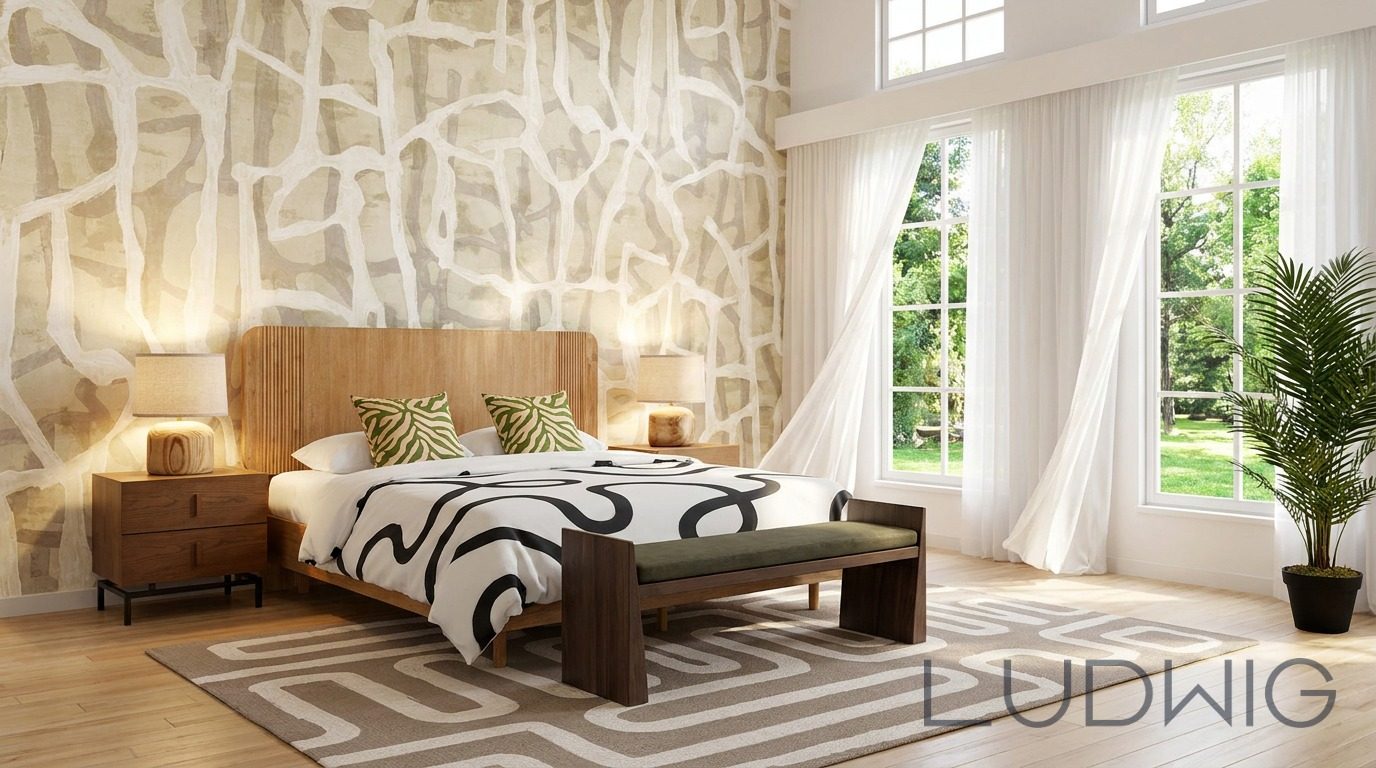
This Organic Green Retreat by Ludwig starts from a bold organic wallpaper, then repeats its warm wood and earthy green in the fluted bed, nightstands and bench. Every piece in it can be ordered.
Bottom Line
Good bedroom design is mostly about scale, light and restraint. Use AI to test bed sizes, palettes and layouts quickly, then pick a tool that turns the design into a shopping list. Start your bedroom in Ludwig: your first 20 designs are free.