AI in Furniture Retail: How Artificial Intelligence Is Changing How Furniture Is Sold
AI Furniture Retail: How Artificial Intelligence Is Redefining Furniture Ecommerce.
AI in furniture retail is reshaping the industry from the ground up. As furniture retailers face rising customer expectations, longer buying cycles, and increasing competition online, artificial intelligence is emerging as a critical tool to improve discovery, personalization, and conversion.
Furniture is not a commodity purchase. It is emotional, visual, and spatial. AI finally allows ecommerce to reflect that reality.
What Does AI in Furniture Retail Mean?
AI in furniture retail refers to the use of artificial intelligence to support how furniture is discovered, merchandised, and purchased, both online and in-store.
Rather than relying on static filters and endless product grids, AI enables retailers to:
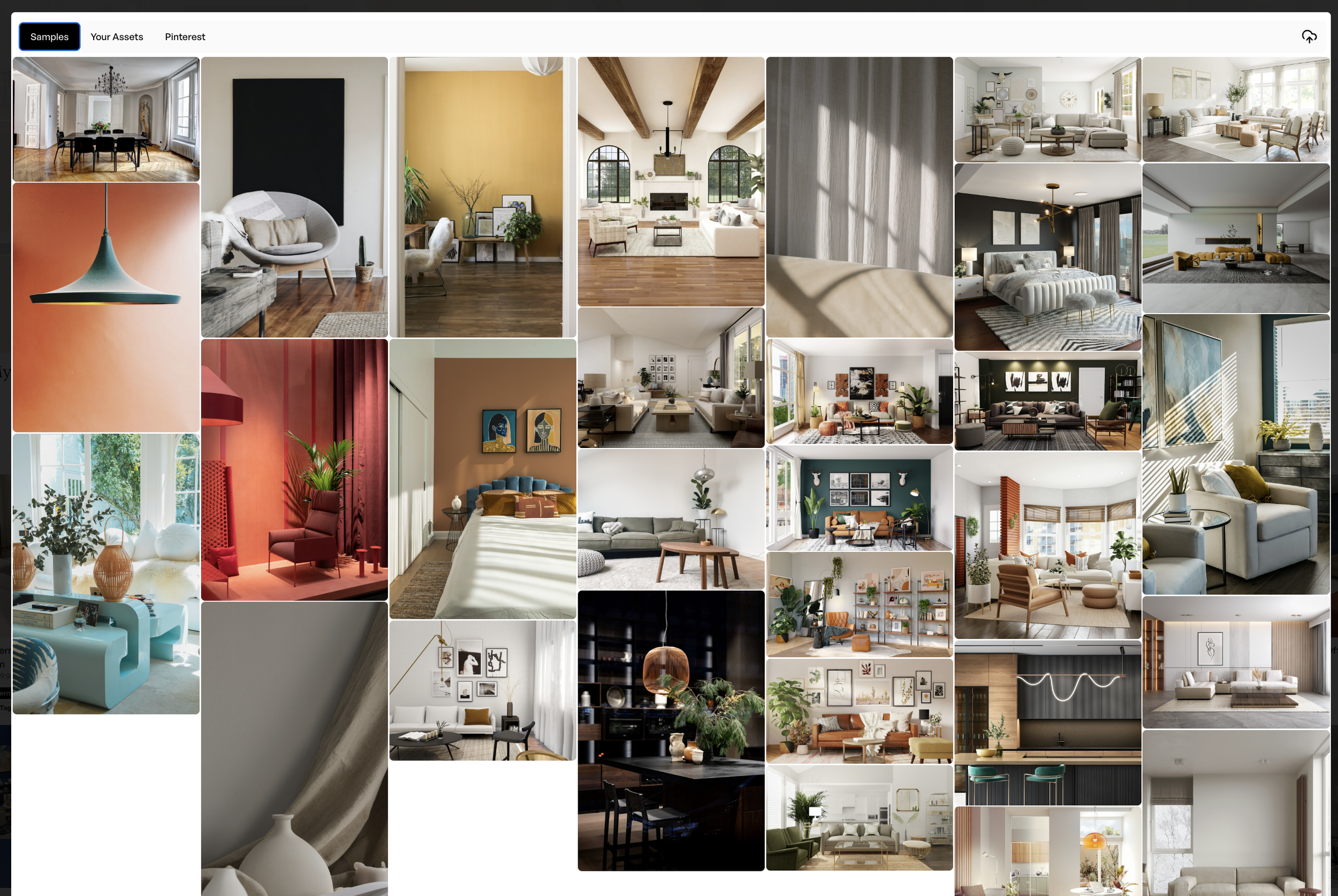
- Understand visual inspiration - See what users are saving to their Pinterest boards
Understand visual inspiration - See what users are saving to their Pinterest boards
- Interpret room context and scale - Recommend what actually works
Interpret room context and scale - Recommend what actually works
- Recommend furniture that works together - Previously only possible with human intervention.
Recommend furniture that works together - Previously only possible with human intervention.
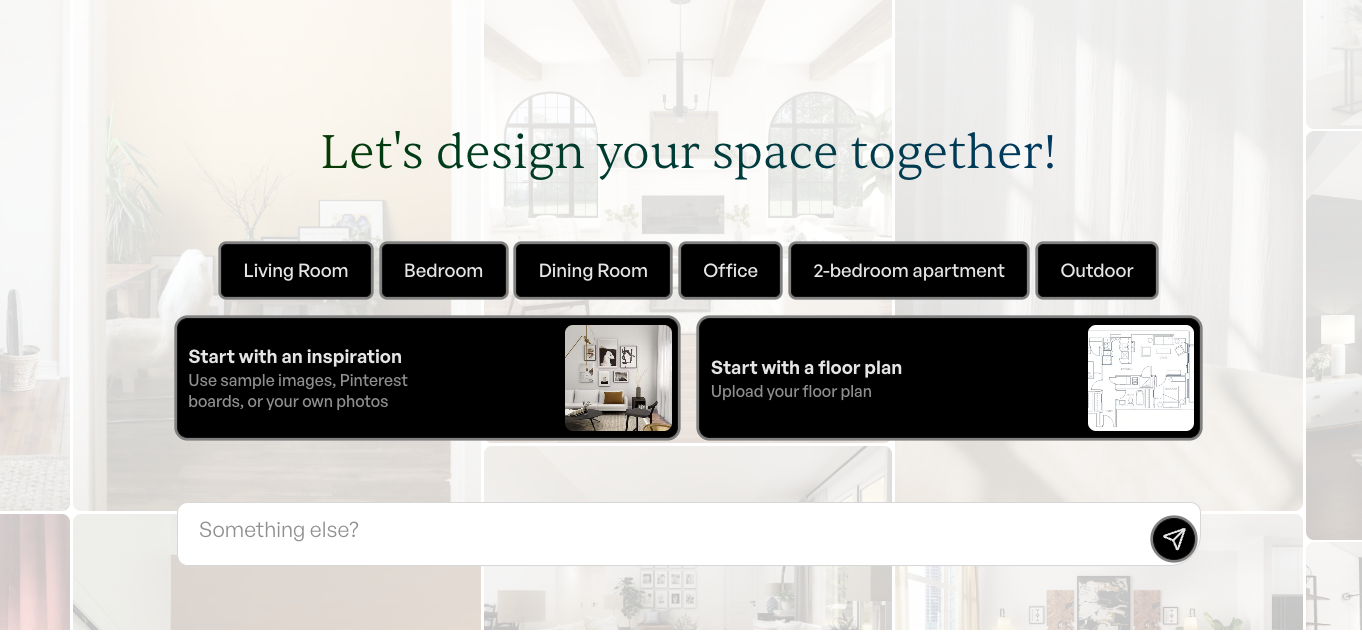
- Sell complete room solutions instead of single products - Increase UPT and Cart values. This creates a more intuitive and personalized shopping experience.
Sell complete room solutions instead of single products - Increase UPT and Cart values.
This creates a more intuitive and personalized shopping experience.
Why Furniture Retail Needs AI
Furniture retail has unique challenges that traditional ecommerce tools were never built to solve:
- Customers shop visually, not by SKU
Customers shop visually, not by SKU
- Products are high-value and hard to return
Products are high-value and hard to return
- Decision-making takes weeks, not minutes
Decision-making takes weeks, not minutes
- Shoppers struggle to imagine how pieces work together
Shoppers struggle to imagine how pieces work together
AI’s use in furniture retail addresses these challenges by aligning technology with real customer behavior.
How AI works for Furniture Retailers
1. Visual Understanding
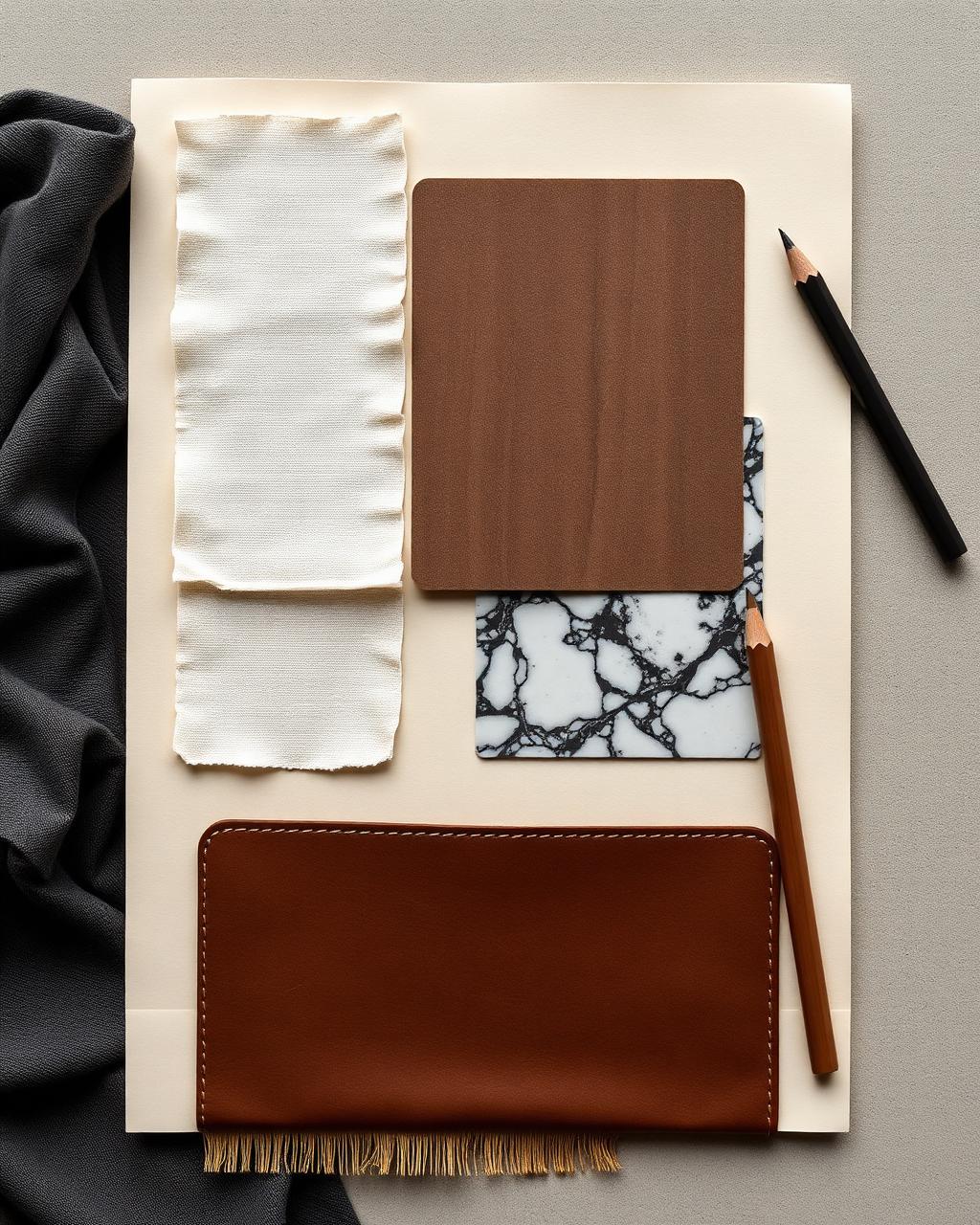
AI analyzes inspiration images and reference photos to identify styles, colors, materials, and design patterns. Customers can start with what they like , even if they don’t know the right words.

2. Intelligent Catalog Structuring
Retailer catalogs are mapped so AI understands how products relate to each other—chairs to tables, lighting to cabinetry, finishes to furnishings.
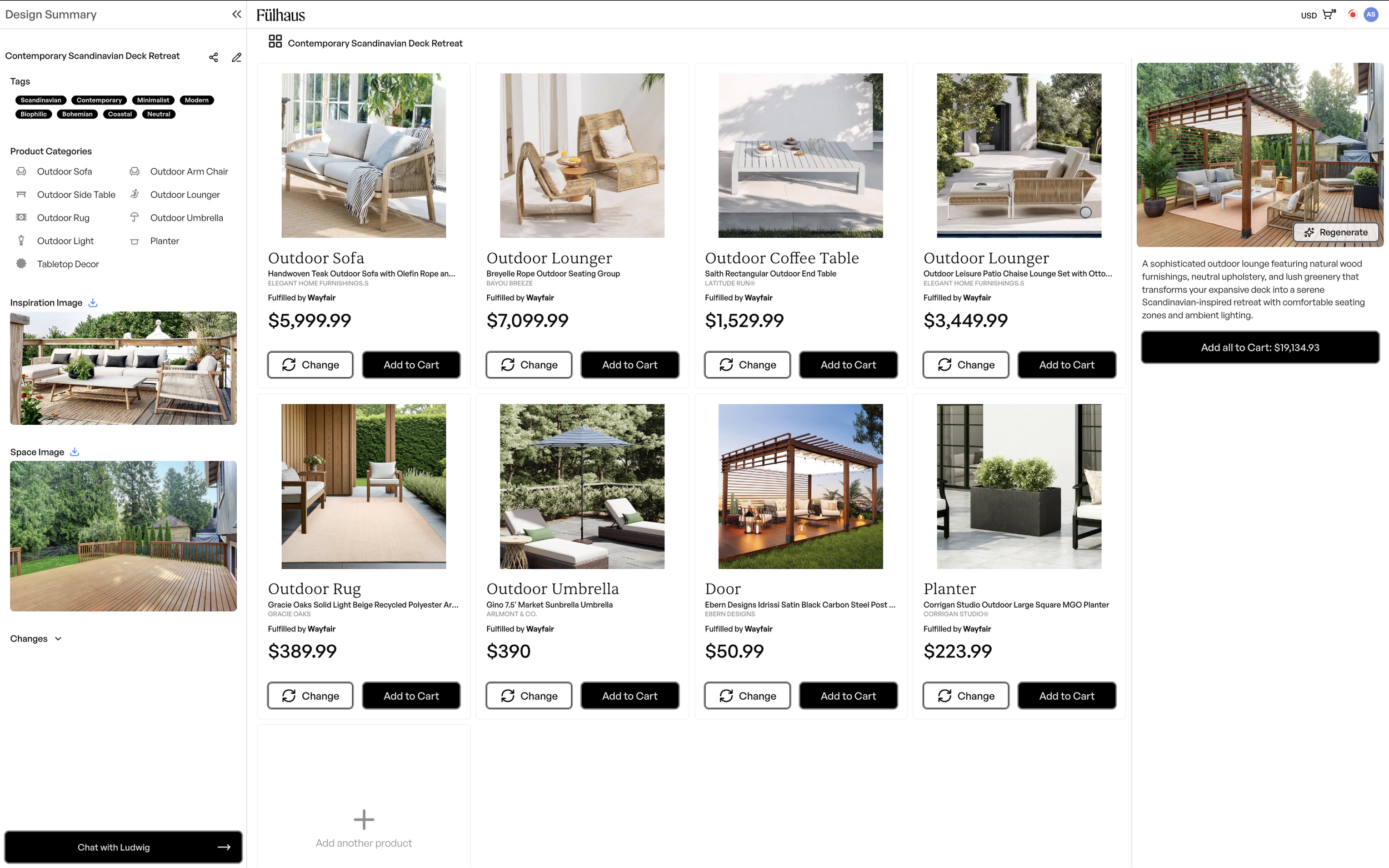
3. Context-Aware Recommendations
AI accounts for room type, layout, and budget, improving product fit and reducing mismatches.
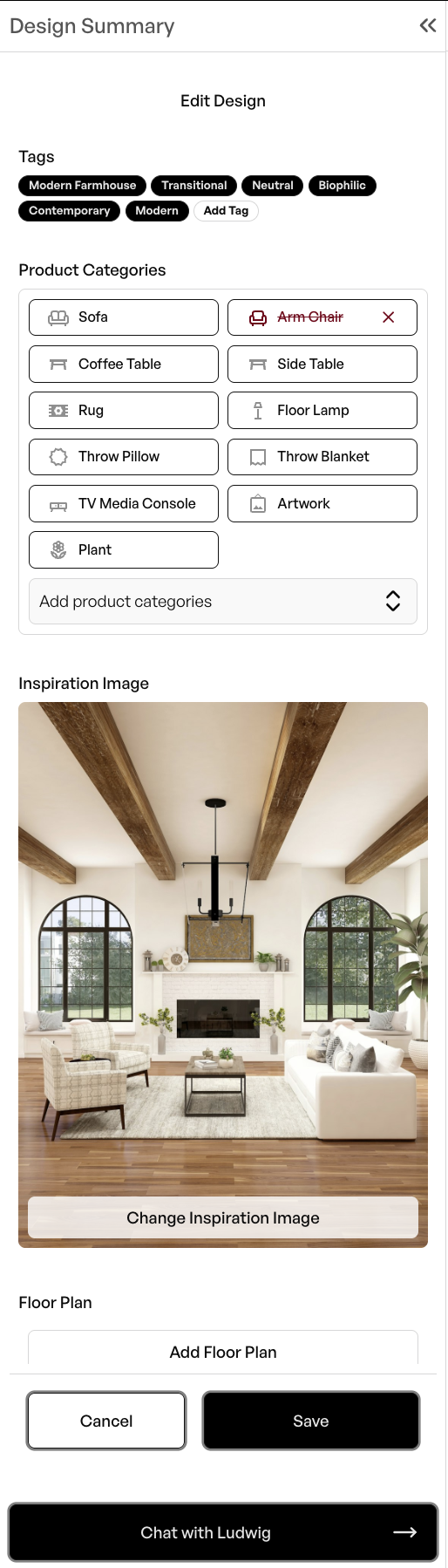
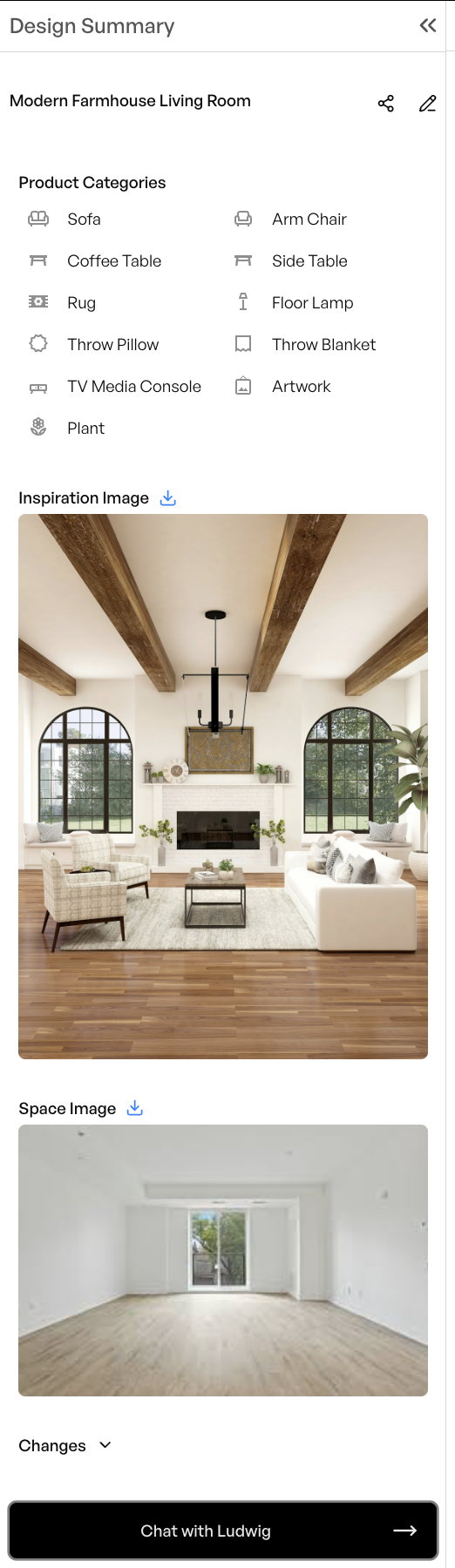
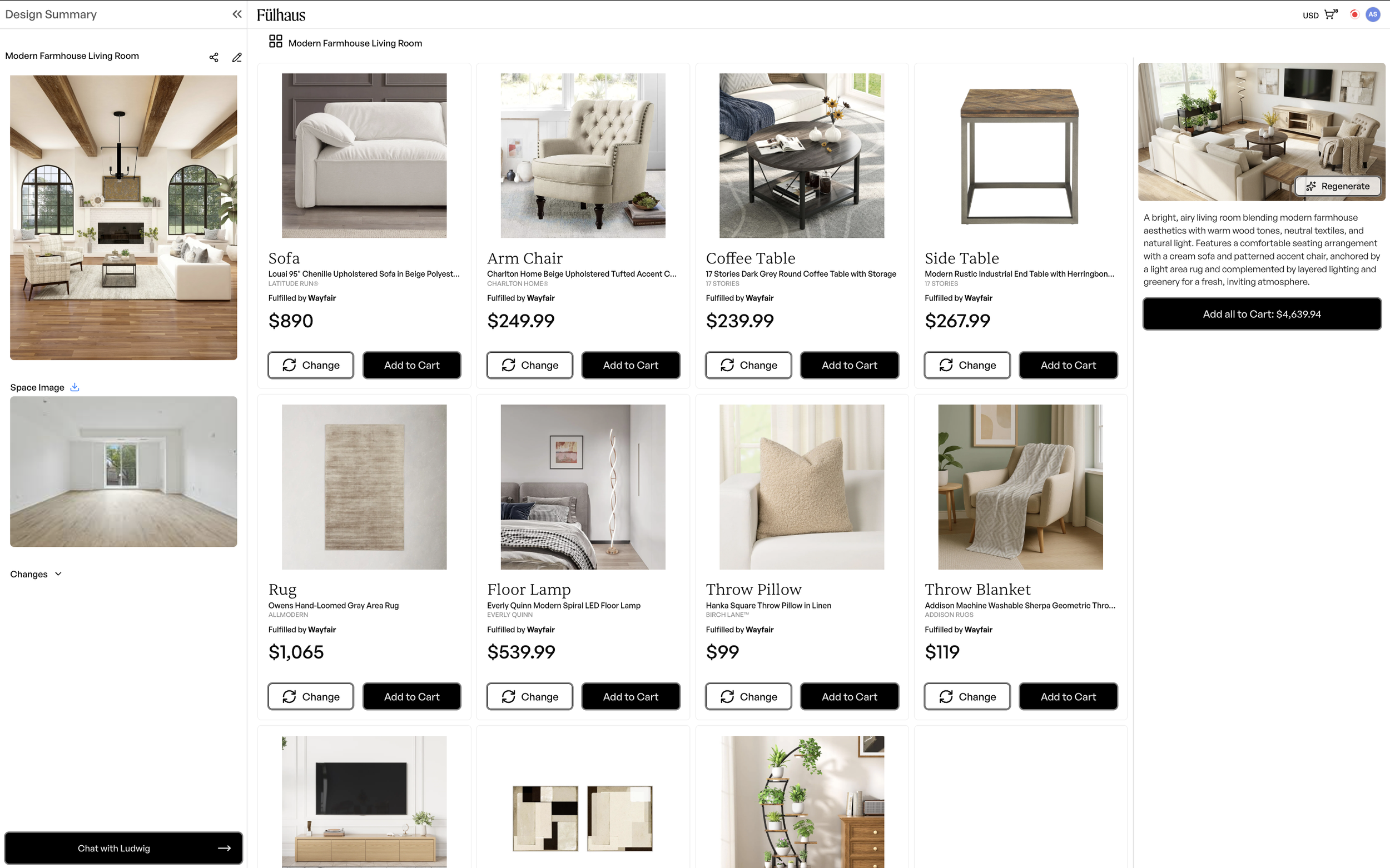
4. Room-Based Merchandising
Instead of selling products one by one, AI enables retailers to sell fully curated room bundles, increasing average order value.
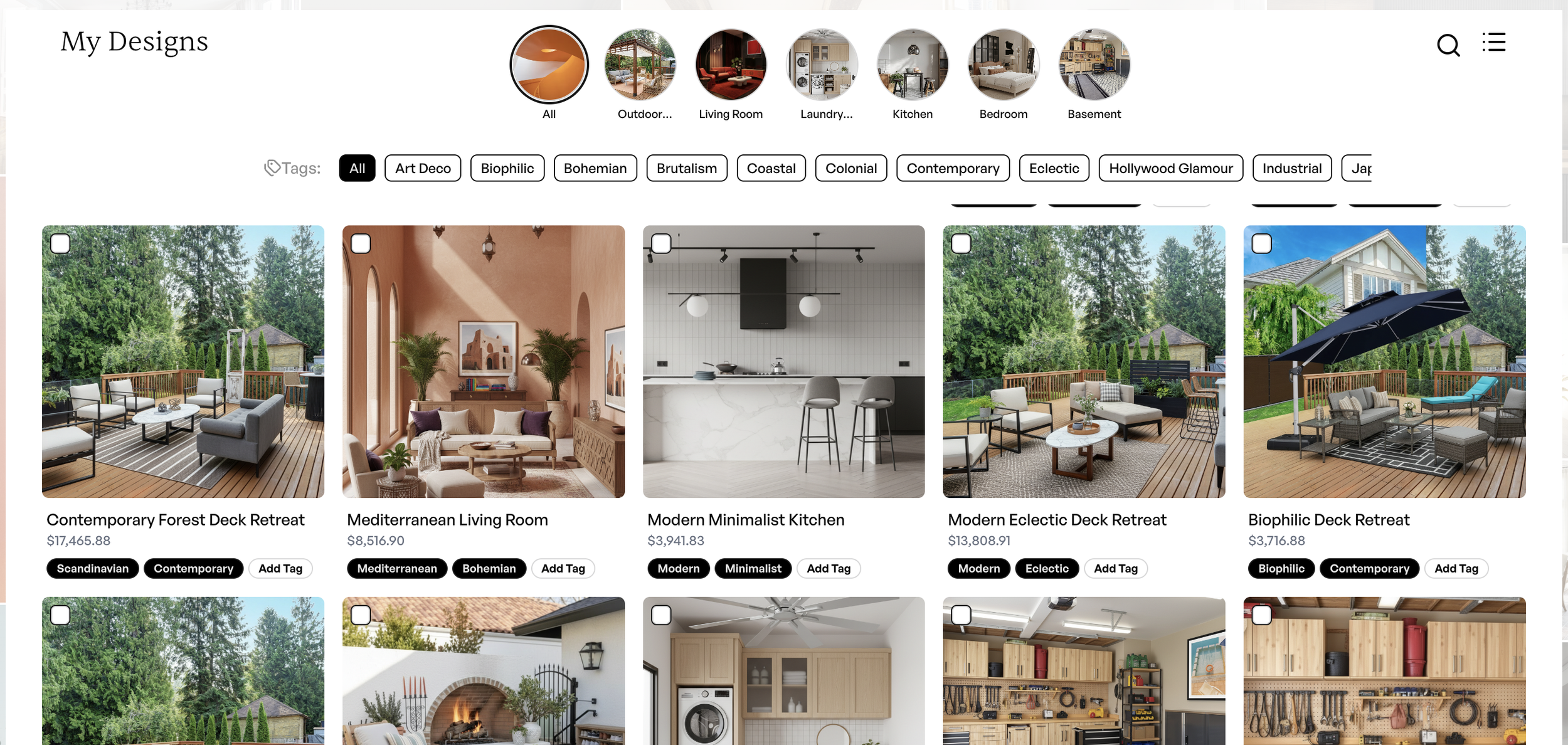
5. Shoppable Design Output
Every AI-generated result is connected to real inventory, pricing, and availability, turning inspiration directly into checkout.
Benefits of AI in Furniture Retail
Higher Conversion Rates
AI reduces choice overload by presenting cohesive, ready-to-buy solutions.
Increased Average Order Value
Selling by room or collection naturally drives larger carts.
Lower Return Rates
Better expectations lead to fewer costly returns.
Faster Buying Decisions
AI shortens the path from browsing to purchase.
Scalable Personalization
Retailers deliver personalized experiences without increasing staffing or design costs.
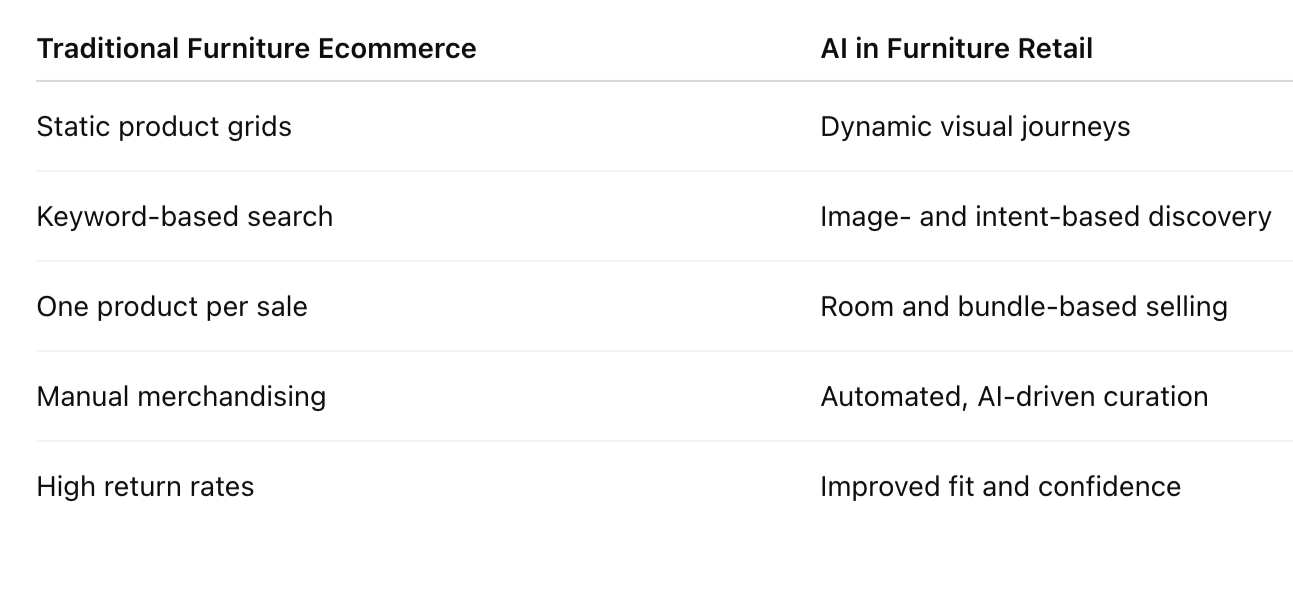
AI in Furniture Retail vs Traditional Ecommerce
AI in Furniture Retail Across Channels
AI is not limited to ecommerce websites.
Furniture retailers are using AI to:
- Support in-store sales associates with instant room designs
Support in-store sales associates with instant room designs
- Create personalized follow-up links after showroom visits
Create personalized follow-up links after showroom visits
- Power interactive kiosks and digital consultations
Power interactive kiosks and digital consultations
- Connect online browsing with in-store purchasing
Connect online browsing with in-store purchasing
AI becomes the connective layer between physical retail and digital commerce.

The Future of AI in Furniture Retail
The future of furniture retail is not about offering more products. It is about offering better guidance .
AI in furniture retail enables:
- Inspiration-led shopping
Inspiration-led shopping
- Design-driven commerce
Design-driven commerce
- Personalization at scale
Personalization at scale
- Higher confidence purchases
Higher confidence purchases
As consumer expectations continue to evolve, AI will move from a competitive advantage to a baseline requirement.
Final Thoughts
AI in furniture retail is transforming how furniture is discovered, designed, and sold. By combining visual intelligence, contextual understanding, and real inventory, AI creates shopping experiences that feel intuitive rather than overwhelming.
For furniture retailers looking to modernize ecommerce, increase conversion, and differentiate on experience—not price—AI in furniture retail is the path forward.